An Ode to February
The end of February is already approaching, and with it comes the quiet comedown of the saturated display of pink and red storefronts and heart shaped candy boxes. As a reporter for a local newspaper, I had the pleasure of writing this month’s Valentines story edition, lending me the opportunity of sitting across from a couple celebrating 70 years of marriage. I had many questions as 70 years of marriage feels like a fairytale in our digital age of Tinder, Hinge, and upgraded social anxiety. Above all, I figured there has to be a secret or one core piece of advice for making a marriage last a substantial amount of time. But what I found is actually far more simple.
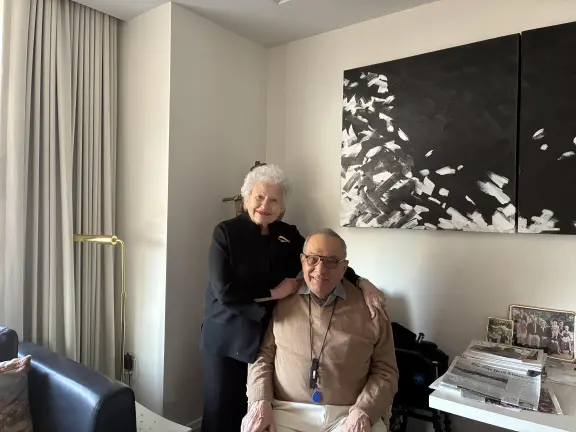
There wasn’t a declaration on soulmates or destiny. Instead, they focused on routines and putting the other person first. My favorite quote from the interview came from Rosalyn Engelman: “Think of the other person. Don’t always think of oneself... and be careful whom you choose.”
Sitting across from Rosalyn and Irwin, I realized how radically countercultural advice feels right now. Despite how true and simple it is, selflessness is sometimes a foreign concept in today’s day in age. “Don’t always think of oneself” runs directly against the principles of a generation raised on self-branding, self-care, and self-protection. We are encouraged to prioritize personal growth and personal ambition in almost all aspects of our life. None of those things are inherently wrong. But somewhere along the way, “put yourself first” became the reflex in almost every scenario.
After my interview, I started asking my friends the same question I had asked the Engelmans: What do you think makes love last?
The answers were wildly different:
“Financial Stability”
“Chemistry”
“Timing”
“Balance”
All valid. But none of them mirrored the same simplicity, not one person mentioned anything about caring for the other person directly. Maybe that difference says more about us than we realize. A week after that interview, theory collided with reality in the most chaotic way possible. My roommate had been talking to someone on Hinge, good photos, good conversation, the usual digital courtship. They planned to meet at a bar downtown where our friend group tagged along.
Except the girl who walked in did not match the photos. At all. Conversation was awkward. When my roommate gently tried to disengage, things spiraled quickly. At one point, the girl literally picked up a small table and threw it toward the bouncer when she was asked to leave. True story.
It’s the kind of thing you half laugh at when re-telling for the rest of your life. Underneath the humor, I found something telling. The entire situation was built on a facade. Curated images and funny 50 word prompts “about me” acted as a constructed identity of someone for maximum appeal. When that illusion cracked in real life, when two actual humans had to confront each other face-to-face, it combusted. That night felt like a caricature of modern dating. We are navigating connection in an era where performance often precedes authenticity.
Seventy years of marriage didn’t survive on chemistry alone. It survived on thinking of the other person even when it would be easier to think only of yourself. Maybe our generation’s struggle with meaningful connection isn’t because we’re incapable of love. Maybe it’s because real love demands something we are still learning how to give: sustained, inconvenient, and unglamorous selflessness.